What started as a new technology centre in Tampere has grown into an important part of Saab’s international research, development and manufacturing operations. Today, advanced electronic warfare technology is not only developed in Tampere – it is manufactured here for customers around the world.
When Swedish defence and security company Saab established its Technology Centre in Tampere in 2017, the company was essentially starting from scratch in Finland when it came to developing and manufacturing its own products locally.
Less than a decade later, the picture looks very different.
Saab Finland employs around 275 people*, continues to recruit and has established its own manufacturing operations in Tampere. One of the clearest examples of this growth is Sirius Compact, a family of advanced passive electronic warfare sensors developed largely in Finland.
In 2025, growing international demand led Saab to open a new production facility in Tampere and move Sirius Compact into serial production. For Saab Finland Managing Director Kristian Tornivaara, the reason this development has happened in Tampere can be summed up in one word: expertise.
From research to a market-ready product in three years
Developing new technology in the defence industry is typically a long process. Sirius Compact followed a different path. According to Tornivaara, Saab was able to move from research to a finished product in approximately three years – including product development, testing and demonstrations with customers.
For an electronic warfare system, he describes the development cycle as exceptionally fast. Behind that speed is a combination of specialised expertise and a product-focused approach to research and development.
Tampere has a long history in fields such as electronics, radio and microwave technologies, software and advanced engineering. That expertise has given Saab access to the skills needed to develop complex technology and turn it into a manufacturable product.
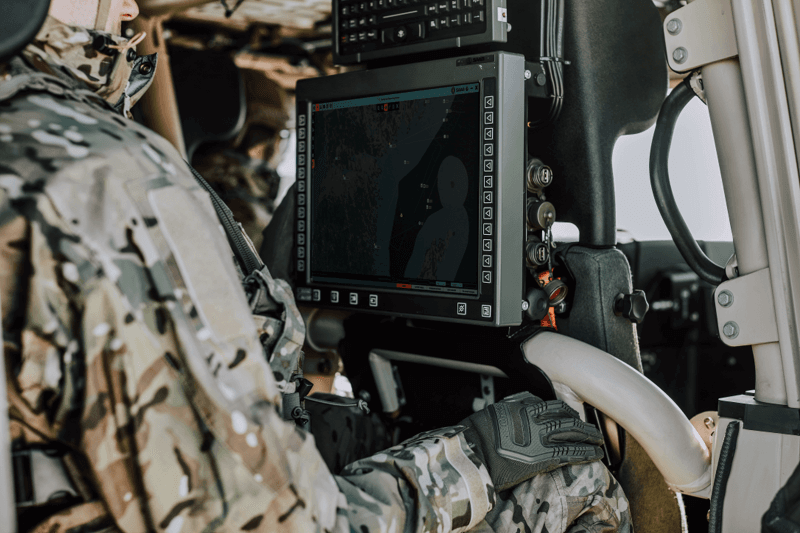
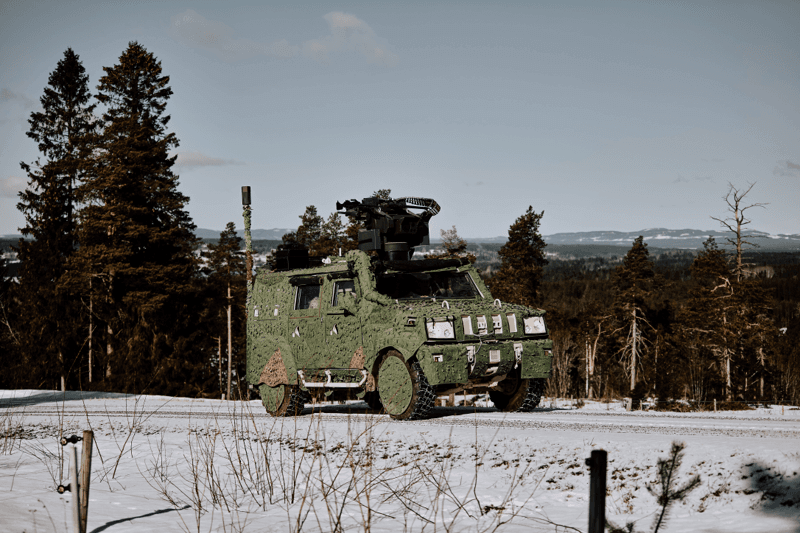
Sirius Compact was launched in 2022. The modular and scalable passive sensor system can detect, classify and geolocate electromagnetic signals while remaining passive itself. Its compact design means the technology can be integrated into different platforms and operational environments. But developing the technology was only the first step.
Growing demand takes production to the next level
As international demand for Sirius Compact increased, Saab made another investment in Tampere. In 2025, the company opened a new manufacturing facility dedicated to serial production of the sensor family. Customer deliveries from the new production line began the same year.
For Saab, the ability to manufacture products at scale is becoming increasingly important. Traditionally, many defence industry solutions have been developed as customer-specific projects and produced in relatively small numbers. Growing demand is changing that model. Products increasingly need to be designed for efficient serial production from the beginning.
Saab Finland has taken a strongly product-oriented approach. Research, product development and manufacturing are closely connected, allowing new technologies to move from development into production quickly. Sirius Compact demonstrates what this can mean in practice: technology developed in Finland is now manufactured in Tampere and exported to international customers.
The local impact extends beyond Saab itself. The company works with Finnish suppliers and uses external engineering expertise as part of its operations, connecting its growth to a wider technology ecosystem.
Why Tampere for defence technology?
When asked why Saab chose Tampere for this work, Tornivaara’s answer is straightforward:
“In one word: expertise.”
The development of advanced electronic warfare systems requires expertise across several disciplines. Tampere offers a concentration of capabilities in electronics design, microwave technology, information systems and software development. For Saab, this combination matters.
Around one fifth of Saab Finland’s employees are estimated to hold doctoral degrees in engineering, while more than two thirds have master’s-level engineering degrees. Developing technology at the international forefront requires not only highly skilled researchers and engineers, but also advanced manufacturing expertise.
“We need the world’s best designers and developers, but also the best manufacturing technology and highly skilled people in production.”
The availability of this talent has allowed Saab to build capabilities in Tampere that extend from research and development all the way to serial manufacturing.
An ecosystem built over decades
Talent is only one part of the equation.
Tornivaara points to Tampere’s broader technology ecosystem as another important factor behind Saab’s growth. The region combines companies, universities, engineering expertise and specialised suppliers across fields that are relevant far beyond the defence industry.
“Tampere has a well-functioning ecosystem in electronics design, microwave expertise, information systems and software. There are many actors here, and the whole ecosystem supports us.”
That ecosystem has not emerged overnight. According to Tornivaara, Tampere has invested systematically for decades in education, technology and creating a modern environment for companies and skilled professionals.
The quality of the living environment also matters when competing for specialised international talent. A safe city, nature, culture and services for families all contribute to Tampere’s attractiveness as a place to build a career.
For Saab, the combination has made Tampere a natural location for continued growth.
From a technology centre to international exports
The development of Saab’s Tampere operations illustrates a wider transformation.
A technology centre established in 2017 has grown into an operation covering research, product development and manufacturing. A product developed largely in Tampere has progressed into serial production. And the expertise accumulated around that work is now providing a foundation for the next generation of electronic warfare technologies.
Sirius Compact is not the end of the story.
Saab continues to develop tactical electronic warfare systems at its Tampere Technology Centre, while its operations and workforce in Finland continue to grow. For Tornivaara, Tampere already provides many of the ingredients a technology company needs.
“Tampere is safe, modern and technology-oriented. Things are very well set up here.”
From specialised talent and research to suppliers and manufacturing capabilities, Tampere offers an environment where advanced technology can move beyond the laboratory – into products, production and global markets.
Saab in Tampere in brief
- Tampere Technology Centre established: 2017
- Focus: electronic warfare, sensors and advanced defence technology
- Key product: Sirius Compact passive electronic warfare sensor family
- Sirius Compact launched: 2022
- Serial production in Tampere: started in 2025
- Saab Finland employees: approximately 275 at the time of the interview
- Local strengths: electronics, microwave technology, software, information systems, engineering and advanced manufacturing
Text: Anna Ryhänen Video: Olli Ikäheimo